Practice: to perform or do repeatedly in order to acquire skill or proficiency; repetition or exercise of an activity in order to achieve mastery and fluency.
"I think we need to not think of forgiveness as a kind of single, punctual act of will - I forgive, and it's over. I think we need to think of it as a practice, as living into something and walking in something, rather than simply doing it and then turning your head and going to do some other business."
~ Miroslav Volf
Thank you to Eric Guthrie for bringing this video to my attention.
Be sure to check out The Fetzer Institute funded film Forgiveness: A Time to Love & a Time to Hate to wrestle further with the practice of forgiveness.
Showing posts with label grace. Show all posts
Showing posts with label grace. Show all posts
Saturday, March 10, 2012

Thursday, December 1, 2011
Lay Lady Lay
"Every woman learns to bleed from the womb, and we bleed to renew life every time it's cut down... It ain't no hassle, no, it ain't no mess, right now it's the only power I possess; These businessmen got the money, they got the instruments of death, but I can make life, I can make breath!"
~ Ani DiFranco, Blood in the Boardroom

~ Ani DiFranco, Blood in the Boardroom
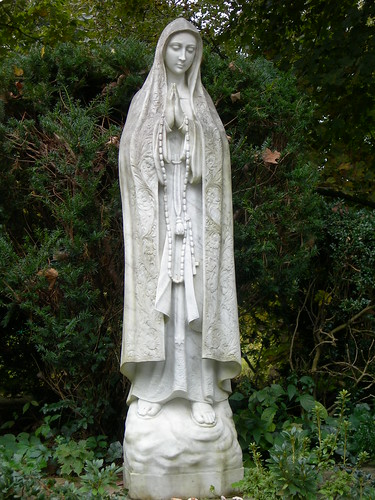
This is the genealogy of Jesus the Messiah the son of David, the son of Abraham:
Abraham was the father of Isaac,
Isaac the father of Jacob,
Jacob the father of Judah and his brothers,
Judah the father of Perez and Zerah, whose mother was Tamar,
Perez the father of Hezron,
Hezron the father of Ram,
Ram the father of Amminadab,
Amminadab the father of Nahshon,
Nahshon the father of Salmon,
Salmon the father of Boaz, whose mother was Rahab,
Boaz the father of Obed, whose mother was Ruth,
Obed the father of Jesse,
and Jesse the father of King David.
David was the father of Solomon, whose mother had been Uriah’s wife,
Solomon the father of Rehoboam,
Rehoboam the father of Abijah,
Abijah the father of Asa,
Asa the father of Jehoshaphat,
Jehoshaphat the father of Jehoram,
Jehoram the father of Uzziah,
Uzziah the father of Jotham,
Jotham the father of Ahaz,
Ahaz the father of Hezekiah,
Hezekiah the father of Manasseh,
Manasseh the father of Amon,
Amon the father of Josiah,
and Josiah the father of Jeconiah and his brothers at the time of the exile to Babylon.
After the exile to Babylon:
Jeconiah was the father of Shealtiel,
Shealtiel the father of Zerubbabel,
Zerubbabel the father of Abihud,
Abihud the father of Eliakim,
Eliakim the father of Azor,
Azor the father of Zadok,
Zadok the father of Akim,
Akim the father of Elihud,
Elihud the father of Eleazar,
Eleazar the father of Matthan,
Matthan the father of Jacob,
and Jacob the father of Joseph, the husband of Mary, and Mary was the mother of Jesus who is called the Messiah.
Thus there were fourteen generations in all from Abraham to David, fourteen from David to the exile to Babylon, and fourteen from the exile to the Messiah.
(Matthew 1:1-17)
Monday, September 19, 2011
Sharing the Love
I've had a tendency lately to post great resources to my facebook wall, without sharing them here where they could be accessed more permanently:
Invitation Into The Contemplative
Tools for Prayer
Review: At the Still Point
And lastly, a personal observation:
Love, Grace, Hospitality, Holy listening: the threads that tie my passions together. I’m recognizing this more & more, and learning that they have to be rooted in rest and trust, in confidence and not in control.
Wednesday, June 8, 2011
Word, Spirit, Community, Fruit
 “Where you go I will go, and where you stay I will stay. Your people will be my people and your God my God.” ~ Ruth
Last night I enjoyed a lovely dinner with friends: food, hospitality, laughter, listening, communion and confession. Somewhere amidst our discussion of the stability of spiritual disciplines versus the chaos of spiritual emotions, I was reminded that this Sunday the Church will celebrate the feast of Pentecost.
Whereas the season of Advent ushers in the celebration of Christmas, and the season of Lent ushers in the celebration of Easter, the celebration of Pentecost leads us into the season of Ordinary Time.
Ordinary Time certainly isn’t the sexiest season in the liturgical calendar. Rather than building up to a great experience (such as the birth or resurrection of Christ), it flows from an experience and permeates our everyday lives. It calls us not to a magical crescendo, but invites us into a deep, daily observance of abiding in Christ and community.
As we shared stories and struggles and relaxed from our meal, I briefly related to my friends that this upcoming liturgical season has grown very important to me over the past several years, and I dare say it has become my favorite.
The Christian observance of Pentecost is intrinsically linked to the Jewish feast of Shavuot, which started last night at sundown. Shavuot commemorates both the first fruits of the wheat harvest, as well as the word of God given to Moses on Mt. Sinai. It is an opportunity to both enjoy and express thankfulness for God’s provision, as well as a celebration of covenant and community, a celebration of God’s presence coming to dwell among us.
For Christians, Pentecost is the fulfillment of God’s indwelling presence. The Word that was and is and is to come had become flesh and dwelled among us, teaching us what love and grace and forgiveness and mercy look like in practice. Jesus taught us that if we abide in him, God’s spirit will abide in us, and we will bear the fruit of that relationship.
After Christ’s resurrection, the disciples came together to celebrate Shavuot, to enjoy the first fruits together in God’s presence. It was during this observance that the Holy Spirit, the counselor and comforter and presence of God, was poured out upon human hearts, and the community that is the Body of Christ was born. This community was to be the presence of God’s kingdom on earth as in heaven, the embodiment of God’s love, grace, forgiveness and mercy that Christ introduced us to.
And it is in the upcoming season of Ordinary time that we get to focus not on waiting for God to break into time, or on waiting for Christ to redeem the world, but on celebrating the fact that God has come, God has redeemed and is redeeming, and God is present in and through the Body as we dwell in the Spirit and open ourselves to the fruit and the gifts that emerge.
It is in Ordinary time that we get to put into practice what we have learned from the Lord, that we enter into that deep abiding through which our lives bear fruit that blesses others, that we enter into the process of cultivating the soil of our neighbors and communities, of removing the obstacles that keep their lives from being receptive to God’s love.
It is in Ordinary time that we learn to rest in the fact that we are loved.
It is in Ordinary time that we dig our heels into the life of community.
It is in Ordinary time that we learn to practice love.
It is in Ordinary time that we certainly mess up.
It is in Ordinary time that we forgive.
It is in Ordinary time that we live.
Friday, March 25, 2011
Spring: part 5 ~ released
 Photo Credit: St. Scholastica Monastery
(…continued from yesterday.)
Entering the labyrinth path, I proceeded at a slow and steady pace, one foot in front of the other, between smooth stones and crunching dried pine needles. I started by tapping each finger one at a time on my leg, repeating the name of the person whose initial was on that fingertip, presenting them before the father.
Pacing the rhythm to my steps, I returned to the first finger and continued winding patiently through the path as I recounted the words that were spoken, the wounds that were cut, the actions that were taken.
Surprisingly, there was no fear, no anxiousness, no sorrow. The bitterness, anger, wounds and pride, indeed, had no power over me. God is greater than my heart, and he knew I was ready.
I repeated each name again, slowly, methodically, melodiously. Then I recited the name of each person’s spouse and, because they are one flesh, I went back through my fingers naming the person and their spouse together.
Once everything was out there, I began to pray forgiveness over each name:
“Lord, I surrender this person to you.
I surrender my need to change what happened,
I surrender my desire to control their actions,
I receive the responsibility to press on toward the goal, to follow your path.”
I lifted each name some more and, as I approached the center, I began rubbing each initial off my fingertips until they were no longer visible. I entered the center of the labyrinth, and I knelt at the feet of the father. One by one, I laid yellow wildflowers I had been carrying in my right hand, one for each person, at his feet, as well. I stood and opened my arms to his spirit. I silently recited several times, “You will go out with joy and be led forth in peace, the mountains and hills will burst forth in song.”
I took my pen and, where I had removed the initials, I inscribed the word “LOOSE” across my fingertips, and drew an open heart on my palm. I circled back out of the labyrinth, reciting scripture and singing hymns of praise, realizing the power to forgive, the awe-inspiring responsibility of forgiveness, comes not from my knowing how to release control, but through leaning on the grace and strength of Christ, my savior.
In the few days that have followed that encounter, it is not as if all memories have been replaced by rainbows and butterflies, but I can sense a change in my spirit. I’m less lethargic, my creative juices are flowing, and I haven’t been late for work all week (hey, that's something). I believe our father longs to release us from the burdens we willingly heap upon ourselves, to bring us fully into the freedom of his presence. If God created us, he knows our faults and our fears, and he formed our innermost being. As the psalmist says, he has searched our hearts, he knows us inside and out, we are fearfully and wonderfully made, wonderful works of his hands.
God knows our anxious thoughts, and yet he calls us to be anxious for nothing, to seek him first and trust him to take care of the rest.
Let us commit our spirits into his hands, whether they are spirits of condemnation, fear, or anxiety. Let us allow him to mold and transform them into spirits of joy, peace and grace. May we learn to forgive as we have been forgiven. May we learn to extend grace as we have received grace. May we grow in the grace and knowledge of our Lord.
Thursday, March 24, 2011
Spring: part 4 ~ initiated
 Photo Credit: St. Scholastica Monastery
I wasn’t the one who did wrong.
I was hurt deeply, you see, so I deserved to feel this way.
And I planned to forgive them, but I didn’t know how. One and maybe I could have handled it. But not when each person’s injury was piled on top of the injuries that had come before. I’m not that strong.
I had books on my shelves that held pieces to the puzzle of forgiving, but I wasn’t quite ready to read them, certainly not to apply them. It wasn’t just the pain, it was the life changes I was forced to make because of each decision, each infliction, that was beyond my control.
But the Lord, he is a tricky thing.
I signed up for the prayer retreat because I love prayer. I love the conversation with my God. I love abiding in his presence, and listening and sharing. And I especially enjoy opportunities to get away to places of beauty and quiet, where I am free to give God my undivided attention.
Arriving at the retreat center, I was filled with joy. Entering the first session, I was filled with calm.
And then the invitation, to go around the room, to make introduction, and to answer the questions: Why are you here? What question will you take to God as you walk the labyrinth? What are you hoping to hear from him? What are you hoping to release?
Like a mother who has taken her child to the doctor on promise of ice cream (Oh, sure. There will be ice cream. But first, let’s go ahead and get these shots out of the way…), the element of surprise, no time to get anxious, just a quick pinch and then all will be well. And I’ll be here with you, holding your hand.
“It’s time,” God said.
“I know,” I replied.
And I did know, because the anxiousness was gone and his peace was present. Why was I there? What did I have to release? My firm grasp on a spirit of condemnation. I wanted to forgive, and I wanted to give up my need to control. I wanted to allow Christ to heal my hurt.
I really should have seen it coming. If I had brought my laptop, I could have looked back at the posts of the previous week and seen that God was leading me to this point. It’s not that I didn’t think I would get to a place of forgiveness, but I figured it would be down the road, after I had figured it all out and knew all the right words, and had sufficiently fortified myself against future attacks. In other words, I would forgive once I had regained control.
Saturday afternoon, after spending the morning reading scripture and resting, I wrote “loose” on my left wrist in thick black ink, for that was my intention. On each finger of my left hand, I inscribed the initial of someone whose debts I needed to forgive, whose actions I needed to release, whose sins I needed to loose. I approached the labyrinth, but I dared not enter. It wasn’t that I thought it was going to be a magical walk, but I knew it would be a powerful one. The path was designed so that I could simply follow, as I conversed with the creator of the universe. No big deal, right?
I circled once around the perimeter of the path, repeating “Whatever you bind on earth will be bound in heaven; whatever you loose on earth will be loosed in heaven.”
And again, repeating “Whosoever you forgive, their sins will be forgiven; whosoever you do not forgive, their sins will not be forgiven.”
A third time, “Forgive, as you have been forgiven.“
Then, because I still did not feel ready (and because I had made reference to the film The Labyrinth the previous day), I circled, repeating to the evil one “You. Have. No. Power. Over. Me.”
And to his fruit, I proclaimed (circling once for each):
“Bitterness has no power over me.”
“Anger has no power over me.”
“My wounds have no power over me.”
“Pride has no power over me.”
The last circle before entering the labyrinth walk was “God is greater than my heart, and he knows everything.”
He knows how I was hurt. He also knows what was going on in the hearts and lives of those I have been unable to forgive. He knows how he will redeem every person and every situation.
I stood at the entrance to the path, took a deep breath, said a prayer for peace and began my pilgrimage.
(to be continued tomorrow…)
Wednesday, March 23, 2011
Spring: part 3 ~ constrained


excerpts from Madeleine L'Engle's The Irrational Season:
It is difficult to bless and not to curse when one's control of a situation is taken away.
It is only when I am not afraid to recognize my own brokenness, to say, "Turn us again, Lord God of hosts, cause thy face to shine and we shall be whole" - that the broken bones may begin to heal, and to rejoice. Without this phos hilaron, this joyous light, we fight against our impotence, in our spiritual lives, our intellectual lives, a large portion of our physical lives.
But in the small events of daily living, we are given the grace to condition our responses to frustrations... If our usual response to an annoying situation is a curse, we're likely to meet emergencies with a curse. In the little events of daily living we have the opportunity to condition our reflexes, which are built up out of ordinary things. And we learn to bless first of all by being blessed. My reflexes of blessing have been conditioned by my parents, my husband, my children, my friends.
Blessing is an attitude toward all of life, transcending and moving beyond words. When family and friends gather around the table to break bread together, this is a blessing. When we harden our hearts against anyone, this is a cursing. Sometimes a person, or a group of people, do or say something so terrible that we can neither bless nor curse. They are anathema. We put them outside the city walls, not out of revenge, not out of hate, but because they have gone beyond anything we fragile human beings can cope with. So we say, Here, God, I'm Sorry. This is more than I can handle. Please take care of it. Your ways are not our ways. You know what to do. Please.
*****
I was beyond any response of either blessing or cursing. But I knew that I couldn't go home until I had been washed clean of the hate... Feeling sick and cold I called Timothy and walked and walked... My dog knew that something had upset me. He kept close as we walked, instead of tearing off in great loops. We kept walking until I had come to the point where I could simply turn over to God whoever had [hurt me]. This person was beyond my puny human ability to understand. I could not add to the curse by cursing. But I did not know how to bless.
Thursday, March 17, 2011
Losing Control

from Walking on Water by Madeleine L’Engle:
Vulnerability is something we instinctively reject because we are taught from kindergarten on that we must protect ourselves, control our behavior and our lives. But, in becoming man for us, Christ made himself totally vulnerable for us in Jesus of Nazareth, and it is not possible to be a Christian while refusing to be vulnerable…
Being a Christian, being saved, does not mean that nothing bad is ever going to happen. Terrible things happen to Christians as well as to Hindus and Buddhists and hedonists and atheists. To human beings. When the phone rings at an unexpected hour my heart lurches. I love, therefore I am vulnerable.
When we were children, we use to think that when we were grown-up we would no longer be vulnerable. But to grow up is to accept vulnerability.
…Homo sapiens. Man who knows. Or rather, man who is conscious would be more accurate. Man who is conscious that he does not know. Has there been a loss of knowing since Adam and Eve, rather than a gaining? Despite all our technology there is far more that we do not know than that we know, and the most terrible defect is our inability to tell right from wrong, to do horrible things for all the right reasons, and then to blunder inadvertently into doing something which turns out to be good. We try to make the loving, the creative decision, but we cannot know whether or not we are right.
Alleluia! We don’t have to be right! We do have to love, to be vulnerable, to accept joy and pain, and to grow through them.
Wednesday, March 16, 2011
Reconcilable Differences

on Binding and Loosing from John Howard Yoder's Body Politics:
Moral discernment and forgiveness condition and enable one another in complex ways. Admonition presupposes prior discernment; otherwise the criteria for admonition would not be common to both parties. Conversation with reconciling intent is the most powerful way for a community to discover when the rules they have been applying are inadequate, so that they may be modified. Asking whether there has really been an offense helps determine which differences need to be resolved by coming to unanimity by means of dialogue and forgiveness and which call for an agreement to differ. Having experienced forgiveness together enables a community to deliberate in an otherwise inacessible mode of mutual trust...
Taking seriously this apostolic witness would seem to put us at the mercy of a number of ecclesiastical scarecrows. It gives more authority to the church than does Rome, trusts more to the Holy Spirit than does Pentecostalism, has more respect for the individual than does liberal humanism, makes moral standards more binding than did Puritanism, and is more open to the new situation than was what some called "the new morality" a quarter-century ago. If practiced, it would radically restructure the life of churches...
...We have here a fundamental anthropological insight into the relationship of conflict and solidarity. To be human is to have differences; to be human wholesomely is to process those differences, not by building up conflicting power claims but by reconciling dialogue. Conflict is socially useful; it forces us to attend to new data from new perspectives. It is useful in interpersonal process; by processing conflict, one learns skills, awareness, trust, and hope. Conflict is useful in intrapersonal dynamics, protecting our concern about guilt and acceptance from being directed inwardly only on our own feelings. The therapy for guilt is forgiveness; the source of self-esteem is another person who takes seriously my restoration to community.
The Christian community has thereby been endowed with the wherewithal for ongoing moral discernment in the face of questions which could not conceivably have been answered substantially ahead of time. Just as a wisely written constitution for an institution or government provides procedures for amendment and for decision making rather than immutable prescriptions, so the Christian community is equipped not with a code but with decision-making potential.
Tuesday, March 15, 2011
Dare to be a sinner.

on Confession and Communion, from Dietrich Bonhoeffer’s Life Together:
But it is the grace of the Gospel, which is so hard for the pious to understand, that it confronts us with the truth and says: You are a sinner, a great desperate sinner; now come, as the sinner that you are, to God who loves you. He wants you as you are; He does not want anything from you, a sacrifice, a work; He wants you alone. "My son, give me thine heart" (Prov. 23:26). God has come to you to save the sinner. Be glad! This message is liberation through truth. You can hide nothing from God. The mask you wear before men will do you no good before Him. He wants to see you as you are, He wants to be gracious to you. You do not have to go on lying to yourself and your brothers, as if you were without sin; you can dare to be a sinner. Thank God for that; He loves the sinner but He hates sin.
Christ became our Brother in the flesh in order that we might believe in him. In him the love of God came to the sinner. Through him men could be sinners and only so could they be helped. All sham was ended in the presence of Christ. The misery of the sinner and the mercy of God - this was the truth of the Gospel in Jesus Christ. It was in this truth that his Church was to live. Therefore, he gave his followers the authority to hear the confession of sin and to forgive sin in his name. "Whose soever sins ye remit, they are remitted unto them; and whose soever sins ye retain, they are retained" (John 20:23).
When he did that Christ made the Church, and in it our brother, a blessing to us. Now our brother stands in Christ's stead. Before him I need no longer dissemble. Before him alone in the whole world I dare to be the sinner that I am; here the truth of Jesus Christ and his mercy rules. Christ became our Brother in order to help us. Through him our brother has become Christ for us in the power and authority of the commission Christ has given to him. Our brother stands before us as the sign of the truth and the grace of God. He has been given to us to help us. He hears the confession of our sins in Christ's stead and he forgives our sins in Christ's name. He keeps the secret of our confession as God keeps it. Whe I go to my brother to confess, I am going to God.
So in the Christian community when the call to brotherly confession and forgiveness goes forth it is a call to the great grace of God in the Church.
Monday, March 14, 2011
Slow to Speak, Quick to Listen

on The Ministry of Listening, from Dietrich Bonhoeffer’s Life Together:
The first service that one owes to others in the fellowship consists in listening to them. Just as love to God begins with listening to His Word, so the beginning of love for the brethren is learning to listen to them. It is God’s love for us that He not only gives us His Word but also lends us His ear. So it is His work that we do for our brother when we learn to listen to him. Christians, especially ministers, so often think they must always contribute something when they are in the company of others, that this is the one service they have to render. They forget that listening can be a greater service than speaking.
Many people are looking for an ear that will listen. They do not find it among Christians, because Christians are talking when they should be listening. But he who can no longer listen to his brother will soon be no longer listening to God either; he will be doing nothing but prattle in the presence of God too. This is the beginning of the death of the spiritual life, and in the end there is nothing left but spiritual chatter and clerical condescension arrayed in pious words. One who cannot listen long and patiently will presently be talking beside the point and never really speaking to others, albeit he be not conscious of it. Anyone who thinks that his time is too valuable to spend keeping quiet will eventually have no time for God and his brother, but only for himself and his own follies.
Brotherly pastoral care is essentially distinguished from preaching by the fact that, added to the task of speaking the Word, there is the obligation of listening. There is a kind of listening with half an ear that presumes already to know what the other person has to say. It is an impatient, inattentive listening, that despises the brother and is only waiting for a chance to speak and thus get rid of the other person. This is no fulfillment of our obligation, and it is certain that here too our attitude toward our brother only reflects our relationship to God. It is little wonder that we are no longer capable of the greatest service of listening that God has committed to us, that of hearing our brother’s confession, if we refuse to give ear to our brother on lesser subjects.
Friday, March 11, 2011
What are you doing here?
(*note* this is a repost from my barefoot bohemian blog, originally posted September 2008. This passage has come up for me again and again during spiritual direction and as a sacred echo in my life, and I thought it would be a good companion to yesterday's question, Where are you?)
 Here's my heart take it where You will
This life has shown me how we're mended and how we're torn
How it's okay to be lonely as long as you're free
Sometimes my ground was stoney
And sometimes covered up with thorns
And only You could make it what it had to be
~ Elijah (Rich Mullins)
Sometimes God tells people to “Go!”
Sometimes God tells people to “Let Go.”
While reading God Whispers, I was captured by references to Elijah and had to spend some time with his story. Throughout 1 Kings 17 & 18, God is telling Elijah, leave here… go here…
Elijah listened. He trusted. He followed.
In chapter 18, he experienced the power of God in amazing ways.
Then in chapter 19, Elijah lost it. He gave in under the pressures of the world and retreated to the desert to lick his wounds. Even in such a pitiful state, the Lord cared for him through His angel, and even acknowledged, the journey is too much for you.
But the journey is never too much for the Lord.
We are told that Elijah was strengthened, and traveled (predictably) 40 days and 40 nights to rest in a cave in the mountain of God.
What are you doing here, Elijah?
As if the Lord didn’t already know the answer, Elijah recounted his woes.
The Lord, called Elijah out of the cave, where he witnessed strong winds, an earthquake and a fire.
And then
Elijah
witnessed
the presence
of the Lord.
A
gentle
whisper.
Again,
What are you doing here, Elijah?
And the prophet of the Lord recounted the same list of sorrows he had before he heard the whisper.
The Lord looked down on His obstinate child, recognizing that, while it was hard for Elijah to let go of the fear and the hurt, that he still trusted in his God.
Go.
And Elijah went.
I haven’t heard the Lord tell me to “Go,” as much in my life as I have heard Him tell me to “Let go.” My whole life I’ve learned to let go of relationships, places, dreams, beliefs and securities. I didn’t always recognize His voice, but He always brought me through on the other side.
Surely God is my help; the Lord is the one who sustains me. (psalm 54:4)
The Lord isn’t surprised by the fact that I’m human, and that sometimes the journey can be too much.
He strengthens me.
He reassures me.
He allows me rest.
He reveals Himself to me.
He questions me.
What are you doing here?
He listens.
And in a gentle whisper, He insists:
Let go. Trust me. Follow.
Wednesday, March 9, 2011
Trip on Grace
I expected to respond to Ash Wednesday with a solemn, sullen post.
In spite of myself, or perhaps true to form, what I ended up with was a meditation built on three spunky songs that may or may not put one in a penitent mood.
One reason that writing is such an essential part of my spiritual journey is it helps me gather and process all the jumbled bits of sight and sound that get soaked up and stored in my soul. I am often like a peddler, with seemingly useless information as my wares, who doesn’t even know what’s in her pack until it falls out at an unexpected moment. Friends and family notice this most often when a random word or phrase uttered causes me to break into (a slightly out-of-tune) song that has been called forth from my memory.
I hear a lot of things, but I don’t always listen well.
Through the process of writing, I take the time to sit down and sort through my ragged bag of trinkets and tokens gathered from an assortment of mundane places. Sometimes I may just sift through the pile, polish some tarnish off a few items, and stuff it all back in the sack. Other times, an article catches my eye and holds my attention, and as I’m paying attention to what I found, I start gazing through the collection and noticing objects that compliment the one I’m holding in my hands. A pile of junk starts to reveal itself as a beautiful assemblage of interrelated treasures.
Writing trains me to listen deeply.
As I learn to listen, as my senses become more attentive to the world around me, I am more open to recognizing and receiving patterns of truth and beauty that are woven through the songs I hear, the words I read, the sights I observe, the friends and teachers I encounter. Margaret Feinberg refers to these as God Whispers and Sacred Echoes. (Lorelai Gilmore refers to them as a wild jungle full of scary gibberish.)
So, I thought of Ash Wednesday.
Ashes, ashes, we all fall down.
All fall down. That's the first song I ever heard from Sarah Masen, who has long been one of my favorite songwriters:
Trip on grace.
That's a lovely phrase.
It requires a great amount of trust, a release of control, for one to trip on grace, to embrace and dive into sweet communion.
Trip on love… that was a good song:
When you feel too much, do you start to panic?
Accepting love requires us to expose ourselves to the possibility of loss.
Grace and love.
Oh, to understand how loved we truly are.
You. Are. Loved.
You. Are. Really. Loved.
Entering into the reflection and repentance of the Lenten season requires the humility to admit your brokenness, but also, and perhaps more importantly, the vulnerability to accept that you are loved in spite of how you may feel, in spite of what you may have done, in spite of who other people are saying you are.
You can be fully honest with God because you are fully loved by God.
You were created out of God’s love. You are sustained through God’s love. You will be redeemed through God’s love.
Ashes to ashes, dust to dust, love to love.
God’s kingdom has come near to us through his son and through his spirit. May we turn toward that truth, may we believe it, may we live and move and have our being within it.
Subscribe to:
Posts (Atom)